



Sofia Electrochemical Days '2026
Sofia Electrochemical Days (SED) is a recognized international scientific forum dedicated to research advances and technological developments in electrochemistry and materials science. Since its inception in 1996, the conference has brought together the academic community, young researchers, and industry partners to explore key challenges and future perspectives in electrochemical science.
The 10th anniversary edition of SED, which will take place in Varna, Bulgaria, from 8 to 12 September 2026, will mark 30 years of scientific exchange and collaboration. Over the years, the conference has evolved into a widely acknowledged meeting platform for researchers and professionals from Bulgaria and abroad, encouraging interaction between fundamental research and applied innovation, and supporting the formation of long-term scientific and industrial partnerships.
Within each forum, a Young Scientists’ Session is organized where young researchers and doctoral (PhD) students present their scientific achievements, the best of which are awarded by an International Jury.
Sponsors and Partners
of the SED 2026 Forum

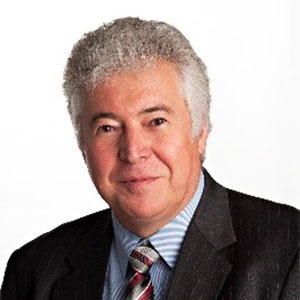
Dr. Boris Monahov
Plenary Speaker
WaveTech GmbH, Germany
Boris Monahov is Chief Science Officer at WaveTech Group, where he leads the company’s research and development activities. He graduated in Solid State Physics from Sofia University in 1980, received his PhD in Electrochemistry and Electrochemical Power Sources in 1994, and completed his habilitation in 1996. His research focuses on lead-acid batteries, including the electrochemistry of lead alloys and carbon additives, oxygen evolution, battery testing, manufacturing technologies, recycling, and battery life extension. He has also conducted comparative studies of lead-acid batteries and other battery technologies, including lithium-ion, nickel-cadmium, nickel-metal hydride, zinc-air, and nickel-zinc systems, as well as research on advanced solutions for automotive applications.
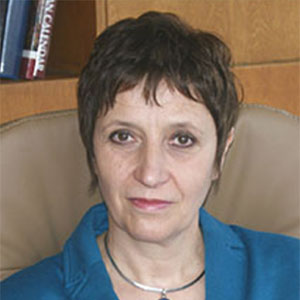
Prof. DSc. Evelina Slavcheva
Plenary Speaker
President of the Bulgarian Academy of Sciences, Bulgaria
Corresponding Member of BAS
Evelina Slavcheva is a Full Professor at the Institute of Electrochemistry and Energy Systems, Bulgarian Academy of Sciences. Since December 2024, she has been President of the Bulgarian Academy of Sciences. She was Director of IEES-BAS from 2015 to 2023 and currently heads the Centre of Competence “HITMOBIL”, which unites ten scientific organizations.
Her research interests include electrocatalysis and hydrogen technologies, with a focus on proton-exchange membrane fuel cells and water electrolysers, as well as corrosion and corrosion protection, electrochemical sensors, and medical applications of electrochemistry. Her pioneering research has resulted in over 100 scientific publications and six utility models, with more than 2,300 citations and an h-index of 25.
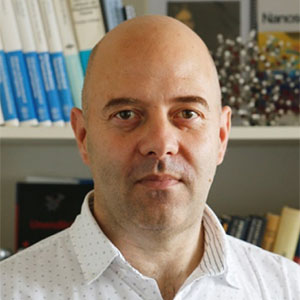
Prof. Dr. Ilia Valov
Plenary Speaker
Forschungszentrum Jülich GmbH and RWTH Aachen University, Germany
IEES-BAS, Bulgaria
Ilia Valov is Head of the Nanoelectrochemistry Group at the Peter Grünberg Institute, Forschungszentrum Jülich, an external lecturer at RWTH Aachen University, and a Professor at IEES-BAS. He graduated in Materials Science with a focus on physical chemistry and electrochemistry from the University of Chemical Technology and Metallurgy in Sofia in 1998 and received his PhD in Physical Chemistry, summa cum laude, from Justus Liebig University Giessen in 2006. His research focuses on electrochemical and physicochemical phenomena at the nano- and sub-nanoscale, particularly memristive materials and devices, artificial neurons and synapses, electrochemical water splitting, and the degradation of electrocatalytic materials under operating conditions. He has authored over 150 scientific publications, which have received more than 11,000 citations, and has an h-index of 53. He has also been included in Stanford University’s list of the world’s top 2% most influential scientists.
Prof. Dr. Luís Cadillon Costa
Plenary Speaker
Department of Physics, University of Aveiro, Portugal
Institute for Nanostructures, Nanomodelling and Nanofabrication (i3N)
Luís Cadillon Costa is a Professor in the Department of Physics at the University of Aveiro and a member of the Institute for Nanostructures, Nanomodelling and Nanofabrication (i3N). He coordinates the Research Group “Physics of Advanced Materials and Devices”, comprising approximately 40 researchers. His research focuses on the synthesis and characterization of materials for applications in electronics and electrical engineering. He has co-authored about 200 scientific papers, seven books, and 23 book chapters, and has presented around 400 contributions at scientific conferences, including 16 invited plenary lectures. His publications have received over 4,000 citations, and he has an h-index of 32. He has coordinated 16 R&D projects, contributed to the development of two industrial prototypes, and supervised 54 students and researchers at different academic levels. He is also an Invited Professor at the University of Calais, France, and the National University of Timor Lorosa’e.
Assoc. Prof. Dr. Plamen Nikolov
Plenary Speaker
IEES-BAS, Bulgaria
Plamen Nikolov is an Associate Professor at the Institute of Electrochemistry and Energy Systems, Bulgarian Academy of Sciences. He received his master’s degree from Sofia University “St. Kliment Ohridski” in 2007 and his PhD from IEES-BAS in 2013. His research focuses on the theoretical and applied aspects of lead-acid battery electrochemistry and technology. His work includes improving dynamic charge acceptance and cycling performance through carbon additives in the negative active mass, as well as studying structural changes in the positive active mass during operation under partial state-of-charge conditions. He is also a co-inventor of a patent on electrolyte additives for lead-acid batteries, and his publications have received nearly 800 citations.
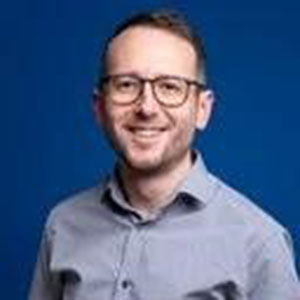
Assoc. Prof. Dr. Roberto Spotorno
Plenary Speaker
University of Genoa, Italy
Roberto Spotorno is an Associate Professor in the Department of Chemistry and Industrial Chemistry at the University of Genoa, Italy. He obtained his PhD in Chemical Sciences and Technologies from the same institution in 2015. His research focuses on applied electrochemistry and metallurgy, particularly corrosion science, energy materials, and electrochemical diagnostics. His work covers corrosion mechanisms and non-invasive electrochemical techniques for cultural heritage conservation, advanced electrode materials for lithium-ion and desalination batteries, and the development of innovative tools for electrochemical measurements and data analysis. He has authored numerous scientific publications in international peer-reviewed journals, which have received over 600 citations.
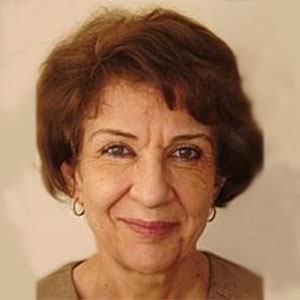
Prof. DSc. Vessela Tsakova
Plenary Speaker
IPC- BAS, Bulgaria
Vessela Tsakova is a full professor and DSc at the Institute of Physical Chemistry of the Bulgarian Academy of Sciences (IPC-BAS). She received her MSc in Solid State Physics from Sofia University "St. Kliment Ohridski" and her PhD in Physical Chemistry from the IPC-BAS.
She specializes in physical chemistry and electrochemistry, particularly the electrochemistry of conducting polymers, electrocatalysis, electroanalysis, and functional electroactive materials for sensing and energy applications.
Professor Tsakova has published numerous articles in international peer-reviewed journals, making significant contributions to the fields of electrochemistry, conducting polymers and electrocatalysis. According to Scopus, her publications have received over 2,400 citations and her h-index is 28.
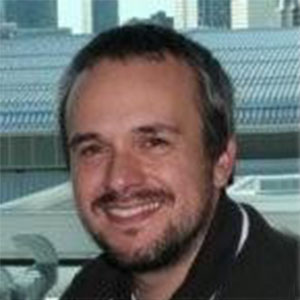
Dr. Alessandro Lavacchi
Invited Speaker
ICCOM-CNR, Italy
Alessandro Lavacchi is a Research Director at the Institute of Organometallic Chemistry of the National Research Council of Italy. He graduated in Chemistry from the University of Florence in 1998 and received his PhD in Materials Science and Technology from the same university in 2003. His research focuses on the development and characterization of nanomaterials for electrochemical energy conversion and storage, particularly alkaline membrane water electrolysis and biomass conversion in electrochemical devices. His work also covers electrocatalysts for hydrogen evolution and oxygen reduction, as well as the recovery and reuse of materials from spent batteries. He has an h-index of 45.
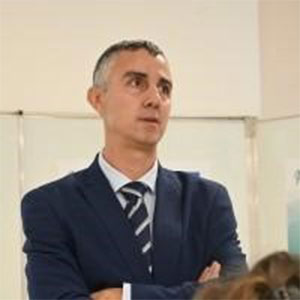
Assoc. Prof. Dr. Blagoy Burdin
Invited Speaker
IEES-BAS, Bulgaria
Blagoy Burdin is an Associate Professor in the Hydrogen Energy Systems Department at IEES-BAS. He received his master’s degree in engineering in 2008, and his PhD in 2013 from the Technical University of Sofia. His research focuses on solid oxide fuel and electrolysis cells, electrochemical impedance spectroscopy, hydrogen energy, and fuel-cell electric vehicles. His recent work includes accelerated stress testing and degradation of solid oxide cells, bifunctional catalysts for rechargeable Zn-air batteries, and anodic nanocatalysts for proton-conducting solid oxide fuel cells. He has contributed to a number of national and international research activities in the field of electrochemical energy conversion.
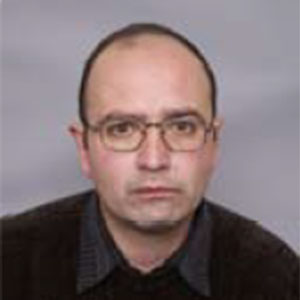
Assoc. Prof Dr. Dimitar Dimitrov
Invited Speaker
Institute of Oceanology "Prof. Fridtjof Nansen" – BAS
Dimitar Dimitrov is an Associate Professor at the Institute of Oceanology, Bulgarian Academy of Sciences. He graduated in Geology and Geochemistry from Sofia University “St. Kliment Ohridski” in 1993 and received his PhD in Ocean and Marine Geology in 2008. He became an Associate Professor in 2011 and served as Head of the Marine Chemistry and Geochemistry Department from 2015 to 2017. His research interests include marine geology, oceanology, geochemistry, geophysics, and engineering geology. He has participated in numerous scientific expeditions in the Black Sea and has authored 126 publications and 8 monographs and textbooks, with approximately 370 citations.
Prof. Dr. Konstantin Petrov
Invited Speaker
IEES-BAS, Bulgaria
Konstantin Petrov is a Professor at the Institute of Electrochemistry and Energy Systems, Bulgarian Academy of Sciences. He graduated as a chemical engineer with a master’s degree in electrochemical production and power sources from the University of Chemical Technology and Metallurgy in Sofia and later obtained his PhD in the same field. He became a Full Professor in 2011. His research focuses on hydrogen energy and electrochemical technologies, particularly hydrogen production from hydrogen sulfide in Black Sea and industrial waters, H₂S/O₂ fuel cells, and processes for the simultaneous removal of hydrogen sulfide and sulfur dioxide. His publications have received over 600 citations.
Prof. DSc. Yolina Hubenova
Invited Speaker
IEES-BAS, Bulgaria
Yolina Hubenova is a Professor at the Institute of Electrochemistry and Energy Systems, Bulgarian Academy of Sciences. She graduated in Biotechnology, specializing in Gene and Cell Engineering, from Sofia University “St. Kliment Ohridski” in 1992 and obtained a second master’s degree in Medical Biology in 1999. She received her PhD in Neurobiochemistry from the Institute of Molecular Biology and Biochemistry at Friedrich Wilhelm University of Bonn, Germany, in 2005. Her research focuses on microbial electrochemical technologies, particularly microbial fuel cells and the mechanisms of extracellular electron transfer from bacteria to the anode. She has authored more than 100 scientific publications, which have received over 1,100 citations, and has an h-index of 20.
Prof. Dr. Maria Manuela da Silva Pires da Silva
Invited Speaker
Department of Chemistry, University of Minho (UMinho), Portugal
Maria Manuela da Silva is a Full Professor in the Department of Chemistry at the University of Minho. She graduated in Chemical Technology from the University of Lisbon. Her research focuses on polymer electrolytes and materials characterization for solid-state devices, including intelligent windows and batteries. Her work covers poly(ethylene oxide)-based systems, sol–gel-derived hybrid networks, and solid polymer electrolytes based on natural polymers. She applies thermal, electrochemical, structural, and microscopic techniques to investigate the properties and performance of these materials. She has authored over 270 scientific publications and seven book chapters, with more than 6,000 citations and an h-index of 42. She has supervised 11 PhD students and serves on the advisory boards of several EU-funded projects.
Wojciech J. Stępniowski
Invited Speaker
Military University of Technology, Warsaw, Poland
Wojciech J. Stępniowski is an Associate Professor at the Military University of Technology in Warsaw, Poland. He received his PhD from the Military University of Technology in 2013. He conducted postdoctoral research at Delft University of Technology, the Netherlands, and at Lehigh University, USA, working on nanostructured materials, anodic alumina templates, and corrosion protection of aluminum alloys. In 2020, he returned to Poland as a laureate of the “Polish Returns” programme, which enabled him to establish his own research group, and in 2021 he obtained his habilitation and became an Associate Professor. His current research focuses on environmentally friendly anodizing of aluminum alloys and on anodizing of copper and copper alloys for electrochemical carbon dioxide reduction. He has published 70 scientific papers, which have received over 3,000 citations. He is also a co-Principal Investigator of an NCN OPUS LAP project on brass anodizing for the electrochemical reduction of carbon dioxide to hydrocarbons and alcohols.
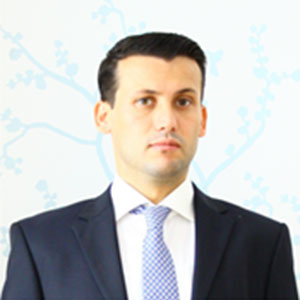
Assoc. Prof. Dr. Saim Emin
Invited Speaker
University of Nova Gorica, Slovenia
Saim Emin is an Associate Professor at the University of Nova Gorica, Slovenia. He received his bachelor’s degree from Sofia University “St. Kliment Ohridski” in 2003 and his master’s degree and PhD in Chemistry from Saitama University, Japan, in 2007 and 2010, respectively. His research focuses on preparative inorganic chemistry and functional materials for sustainable energy conversion and environmental catalysis. He develops nanostructured metal oxides, metal–organic frameworks, transition-metal phosphides, carbides, chalcogenides, and semiconductor materials for electrocatalysis, photocatalysis, and photoelectrochemistry. His work includes water splitting, hydrogen evolution, nitrogen and nitrate reduction, CO2 conversion, and the degradation of environmental pollutants. He has published 50 peer-reviewed articles, with nearly 1,500 citations and an h-index of 21.
Dr. Serhiy Cherevko
Invited Speaker
Forschungszentrum Jülich GmbH, Germany
Serhiy Cherevko is Head of the Electrochemical Energy Conversion Group at the Helmholtz Institute Erlangen-Nürnberg for Renewable Energy. Before joining HI ERN in 2016, he worked as a postdoctoral scientist at the Max Planck Institute for Iron Research in Germany. He received his master’s degree in Physics with honors from Karazin University, Ukraine, in 2004 and his PhD in Nanoscience from Sungkyunkwan University, Republic of Korea, in 2009. His research focuses on the physical chemistry of metal and semiconductor oxidation and dissolution, electrocatalysis, interfacial electrochemistry, and the development and optimization of catalyst layers for fuel cells and water electrolysis.
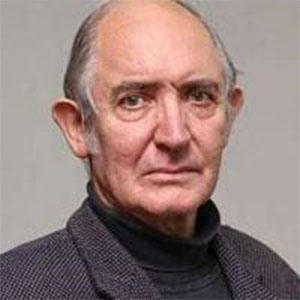
Prof. DSc. Venko Beshkov
Invited Speaker
IChE-BAS, Bulgaria
Venko Beschkov is a full professor and DSc at the Institute of Chemical Engineering of the Bulgarian Academy of Sciences. He holds Ph.D. and D.Sc. degrees in chemical engineering.
His research interests include chemical and biochemical engineering, bioreactors, waste treatment and valorisation, and electrochemical studies, particularly fuel cells. He combines fundamental and applied research in bioprocess engineering, environmental technologies and electrochemical energy conversion.
Professor Beschkov has authored numerous scientific publications in international peer-reviewed journals and has made significant contributions to biochemical engineering, environmental biotechnology and electrochemical energy systems. His publications have an h-index of 22.